Fiji Advances Climate Resilience and Infrastructure Financing
October 7, 2026
Fiji Day Celebration Commemorate
October 13, 2026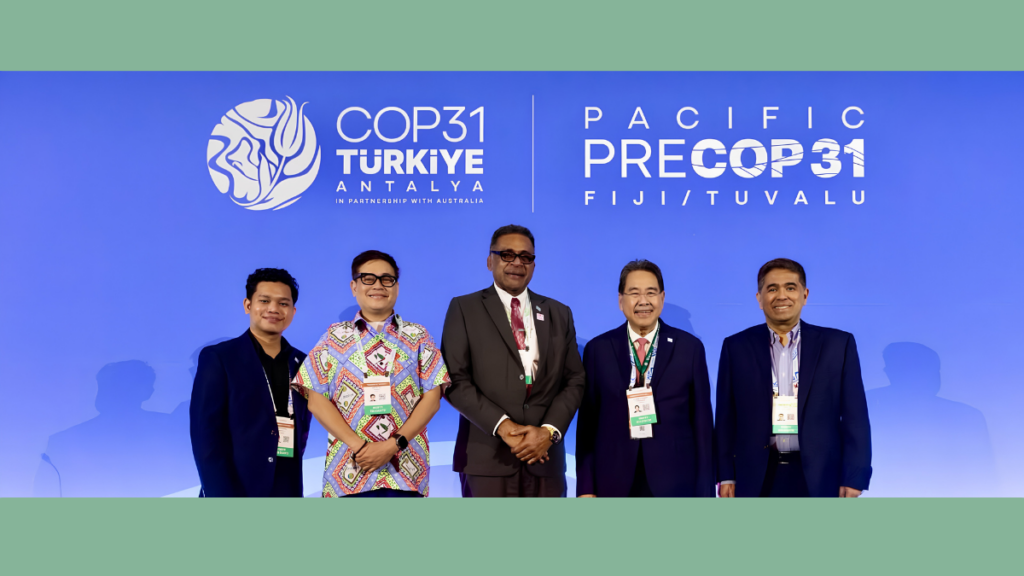
The Minister for Finance, Hon. Esrom Immanuel, participated in ministerial breakout discussions at the Pre-COP event on 8 October 2026, outlining Fiji’s priorities across three key areas: science and the second Global Stocktake (GST2), improving the multilateral climate system, and adaptation.
The Minister called for decisions grounded in science, a climate system that responds effectively to vulnerable countries, and adaptation commitments backed by finance and practical support.
Minister Immanuel stressed that climate science must remain central to international decision-making, highlighting the close connection between scientific findings and the daily experiences of Pacific communities facing coastal erosion, changing fisheries, stronger storms and pressure on freshwater supplies.
He urged Parties to connect ambition with implementation by assessing whether vulnerable developing countries have the finance, technology and capacity needed to fulfil their climate commitments. GST2 should build on the first Global Stocktake, including the agreed transition away from fossil fuels in a just, orderly and equitable manner.
Minister Immanuel reaffirmed Fiji’s support for a rules-based multilateral climate system, calling for improvements that make it more accessible, inclusive and effective.
He highlighted the barriers countries face when accessing climate funds, including differing accreditation, application and reporting requirements. Countries with the greatest needs, he said, should not face the greatest obstacles to obtaining support.
The Minister called for meaningful participation by Indigenous Peoples, women, young people, persons with disabilities and local communities. He also highlighted the challenges small delegations face when negotiations take place simultaneously across several workstreams.
Minister Immanuel emphasised that adaptation is fundamental to the survival and wellbeing of Pacific communities. Its importance is reflected in village protection, community relocation, and the security of water, food, health services and livelihoods.
The Minister outlined three adaptation priorities for COP31: clearer and more accountable financing arrangements, simplified nationally owned reporting, and implementation that delivers support to communities.
Fiji also stressed that Global Goal on Adaptation indicators must remain voluntary, country-driven and non-prescriptive. They should complement existing national plans and reporting systems, without creating additional burdens, ranking countries or becoming conditions for accessing finance.
On the Baku Adaptation Roadmap, he urged climate funds and development partners to coordinate support that strengthens national data systems, builds capacity and turns adaptation needs into funded projects.
Fiji reaffirmed its commitment to working constructively with all Parties to ensure that scientific evidence, multilateral cooperation and adaptation financing translate into tangible outcomes for people on the front lines of climate change.